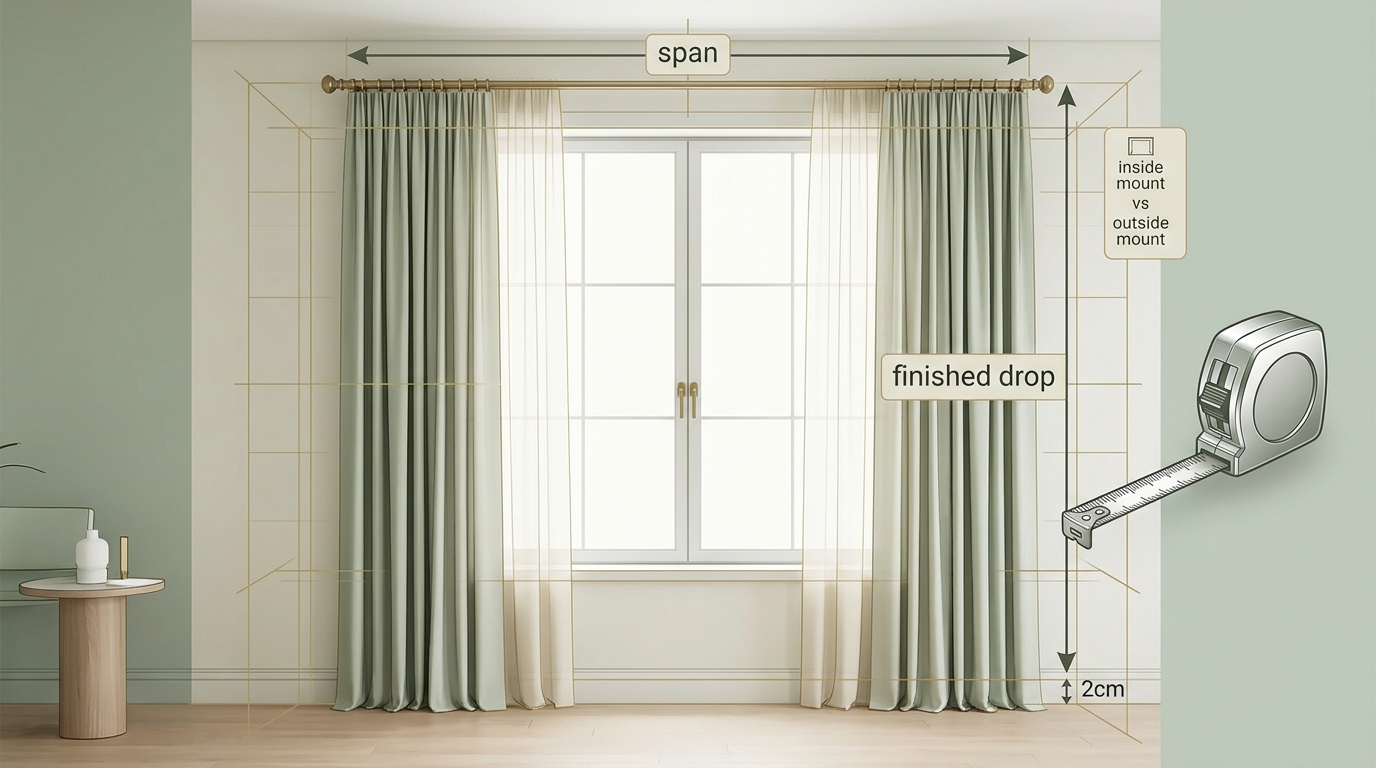
How To Measure For Curtains
A practical 2026 guide to measuring curtain width and drop correctly, choosing inside or outside mounting, and avoiding the most common tape-measure mistakes.
How To Measure For Curtains
Curtains can make a room feel finished, softer, and more deliberate, but only if the measurements are right. A curtain that is too narrow looks skimpy. A curtain that is too short can make a window feel accidental. A curtain that is measured from the wrong reference point can look wrong even if the fabric itself is expensive.
That is why measuring matters more than people expect. The goal is not just to find the size of the glass. The goal is to decide how the curtains should look once they are hanging.
What tape measure should you use?
For curtains, a pocket tape measure is usually the best tool because you are working with:
- wall width
- pole or track width
- floor-to-rail drop
- repeated straight-line room measurements
A soft sewing tape is fine for checking fabric itself, but wall and window measurements are easier with a rigid retractable tape.
Before you measure anything
Decide these three things first:
- Will the curtain hang from a pole or a track?
- Will the finished curtain sit to the sill, below the sill, or to the floor?
- Are you measuring the window opening, or the full visual area the curtains should cover?
That last point is the one beginners miss. Curtains are usually not measured to the glass alone. They are measured to the visual span you want the fabric to frame.
Step 1: Measure the curtain width
The cleanest method is to measure the pole or track width, not just the glass width.
If the pole or track is already installed
Measure from one end of the pole or track to the other, excluding decorative finials unless the curtain is intended to cover them.
If the pole or track is not installed yet
Measure the window width and then add extension space on both sides so the curtains can stack back properly when open.
A common rule is to add:
- around 15 to 20 cm on each side for smaller windows
- more for wide windows or rooms where you want a fuller look
This extra width helps the curtains clear the glass and lets more daylight in when the curtains are open.
Step 2: Decide how full you want the curtains
The width you measure is not always the same as the finished fabric width you buy.
Curtains look better when they have fullness. A flat one-to-one panel can look underdressed unless the style is deliberately minimal.
Many curtain buyers use this rough rule:
- 1.5x width for a lighter, more tailored look
- 2x width for a fuller standard look
- 2.5x or more for richer pleated styles
So if your pole width is 200 cm, the total curtain fabric width may need to be:
300 cmfor light fullness400 cmfor standard fullness
This is why measuring the opening alone is not enough. Curtain buying is part measurement and part styling decision.
Step 3: Measure the curtain drop
The drop is the vertical measurement from the hanging point to the desired finished length.
For pole curtains
Measure from the top of the pole ring position or the hanging point used by that curtain style.
For track curtains
Measure from the underside of the track to the finished bottom point.
Common finished lengths
- Sill length: ends just above the sill
- Below-sill length: finishes 10 to 15 cm below the sill
- Floor length: finishes just above the floor
- Puddle length: intentionally longer so fabric pools slightly on the floor
If you want a practical everyday finish, floor-length curtains usually stop about 1 to 2 cm above the floor. That avoids constant dragging while still looking clean.
Step 4: Measure more than once
Do not assume the floor, ceiling, or window is perfectly level.
Measure:
- left side drop
- center drop
- right side drop
If the numbers vary, use the one that suits the safest visual outcome. In most cases, curtain buyers choose the longest relevant drop and then fine-tune during hemming if needed.
Common mistakes when measuring for curtains
1. Measuring the glass instead of the overall curtain span
Curtains are a room feature, not just a glass covering. If you only measure the visible glass, the finished treatment often looks too narrow.
2. Forgetting fullness
This is one of the most common buying errors. People order a curtain width equal to the pole width and then wonder why the finished look feels flat.
3. Measuring from the wrong starting point
The starting point changes depending on rings, eyelets, heading style, or track attachment.
4. Ignoring uneven floors
A room that looks level to the eye may still vary enough to affect a full-length curtain.
5. Mixing centimeters and inches mid-measurement
If you measure the width in centimeters and the drop in inches without noticing, the order can go wrong fast.
Quick curtain measuring checklist
- measure the pole or planned pole width
- decide the fullness multiplier
- measure the drop in three places
- confirm the heading style
- confirm whether the curtain is sill, below-sill, floor, or puddle length
- write everything down immediately
Bottom line
To measure for curtains properly, you need to think beyond the window itself. Measure the pole or planned span, decide how much fullness you want, then measure the drop from the real hanging point. A good curtain measurement is not just a number. It is a decision about coverage, proportion, and how the room should feel once the fabric is in place.
Prefer an offline copy? Download this article as PDF .