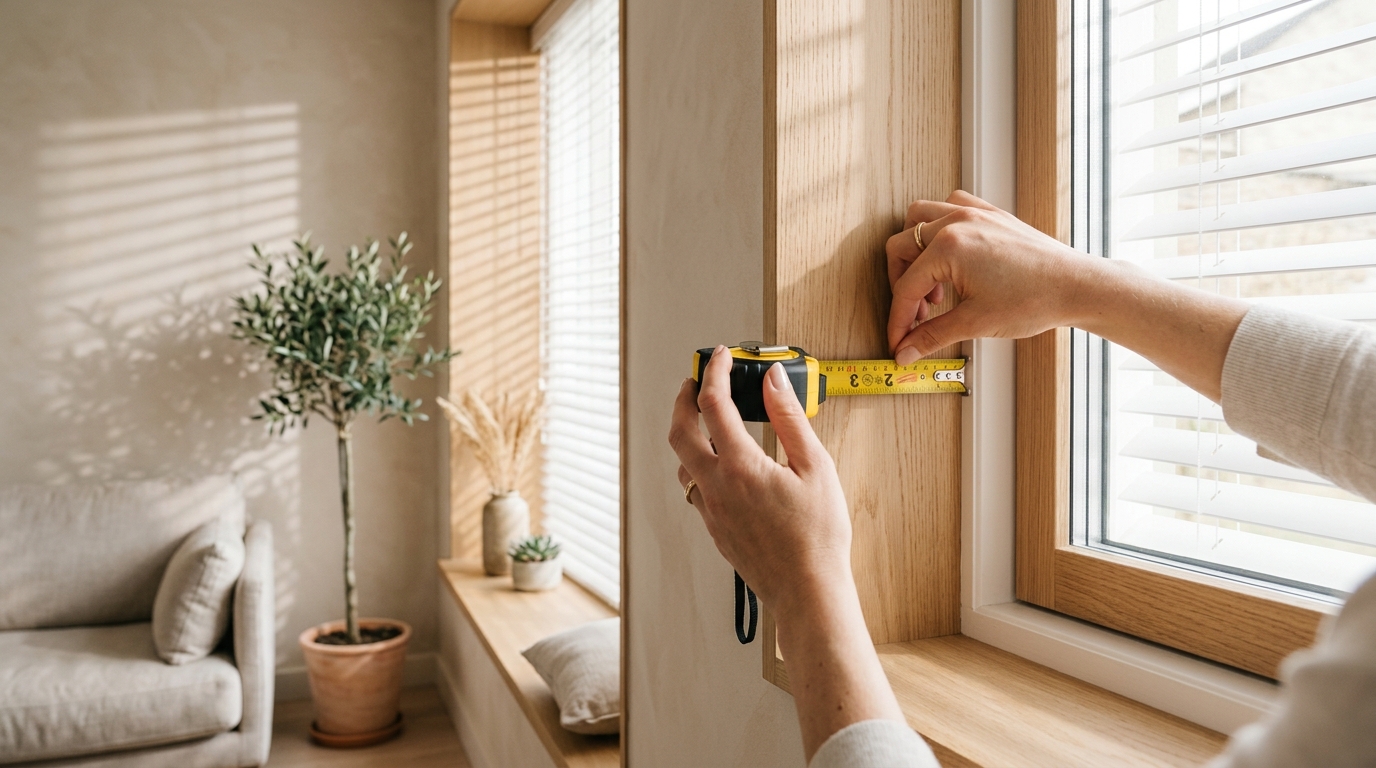
How To Measure For Blinds
A detailed guide to measuring inside-fit and outside-fit blinds correctly, including recess depth, width, drop, and the mistakes that most often cause ordering problems.
How To Measure For Blinds
Blinds look simple until you have to order them. Then the small details matter a lot: recess width, drop, mounting style, handle clearance, tile depth, and whether the supplier expects exact size or finished blind size.
That is why blind measuring is one of the easiest home-improvement tasks to get almost right and still end up with the wrong product.
First decide: inside fit or outside fit
Before you touch the tape measure, decide whether the blind will sit:
- inside the window recess, or
- outside the recess, overlapping the wall around the window
This choice changes almost every measurement that follows.
What tape measure should you use?
Use a pocket tape measure. Blinds are a straight-line measuring job, and the hook plus rigid blade make recess measurements easier than a soft tape.
If the recess is deep or awkward, a lockable tape is even better because it lets you hold the reading position without the blade collapsing.
How to measure for inside-fit blinds
Inside-fit blinds sit within the recess, so accuracy matters. You are measuring the real opening, not an approximate window width.
Step 1: Measure the width in three places
Measure:
- the top width
- the middle width
- the bottom width
Old walls and plaster are often not perfectly square. Use the smallest of the three widths when ordering inside-fit blinds unless the supplier instructs otherwise.
Step 2: Measure the drop in three places
Measure:
- left side drop
- center drop
- right side drop
Use the largest of the three drops unless the supplier provides a different rule. This helps make sure the blind covers the full opening vertically.
Step 3: Check recess depth
This step gets skipped too often. A blind can have the right width and drop but still not fit properly if:
- the recess is too shallow
- window handles project too far
- tiles or trim reduce usable depth
Depth matters especially for Venetian, Roman, and some blackout blind styles.
How to measure for outside-fit blinds
Outside-fit blinds cover more than the recess itself. They are often chosen when:
- the recess is too shallow
- the window is out of square
- you want better blackout coverage
- you want the window to appear larger visually
Step 1: Measure the area you want covered
This is not just the glass width. Measure the full visual span you want the blind to cover.
Most people add overlap on each side and above the opening. A practical rule is to add enough coverage so the blind extends beyond the recess and does not leave distracting light gaps.
Step 2: Decide the finished drop
Do you want the blind to finish:
- just below the sill
- well below the sill
- or all the way to the floor for full-height windows?
Measure that finished drop deliberately instead of assuming the recess height decides it automatically.
The three biggest blind-measuring mistakes
1. Not checking whether the supplier makes deductions
Some blind sellers ask for the exact recess size and then make a small factory deduction themselves for fitting clearance. Others want you to provide the final blind size.
This is one of the most expensive blind-ordering mistakes because both numbers can look “right” on paper.
2. Measuring only once
Windows are rarely perfect rectangles. A single width measurement taken in the middle is not enough.
3. Ignoring handles, tiles, and obstructions
Bathroom and kitchen windows often have handles, splashback edges, or tile returns that affect how a blind can sit.
A practical inside-fit checklist
- measure width at top, middle, and bottom
- use the smallest width
- measure drop at left, center, and right
- use the largest drop
- measure recess depth
- check for handle clearance
- confirm whether the supplier makes size deductions
A practical outside-fit checklist
- measure the recess width and height
- decide how much overlap you want on each side
- add extra coverage above and below if needed
- check whether the blind clears handles and trim
- mark the real fixing points before ordering
When outside fit is often the smarter choice
Outside-fit blinds are often easier when:
- the recess is uneven
- you want better blackout performance
- the window is shallow
- you do not want to fight around window handles
Many people assume inside fit always looks neater. Sometimes it does. But outside fit is often more forgiving and visually stronger when the window opening is imperfect.
Bottom line
To measure for blinds correctly, first decide inside fit or outside fit. Then measure width and drop in multiple places, check recess depth, and confirm whether the seller makes factory deductions. The best blind measurement is not just precise. It is precise in the way the manufacturer expects.
Prefer an offline copy? Download this article as PDF .